
Programming for Possibility
Designing age-based movement programs that reflect potential.

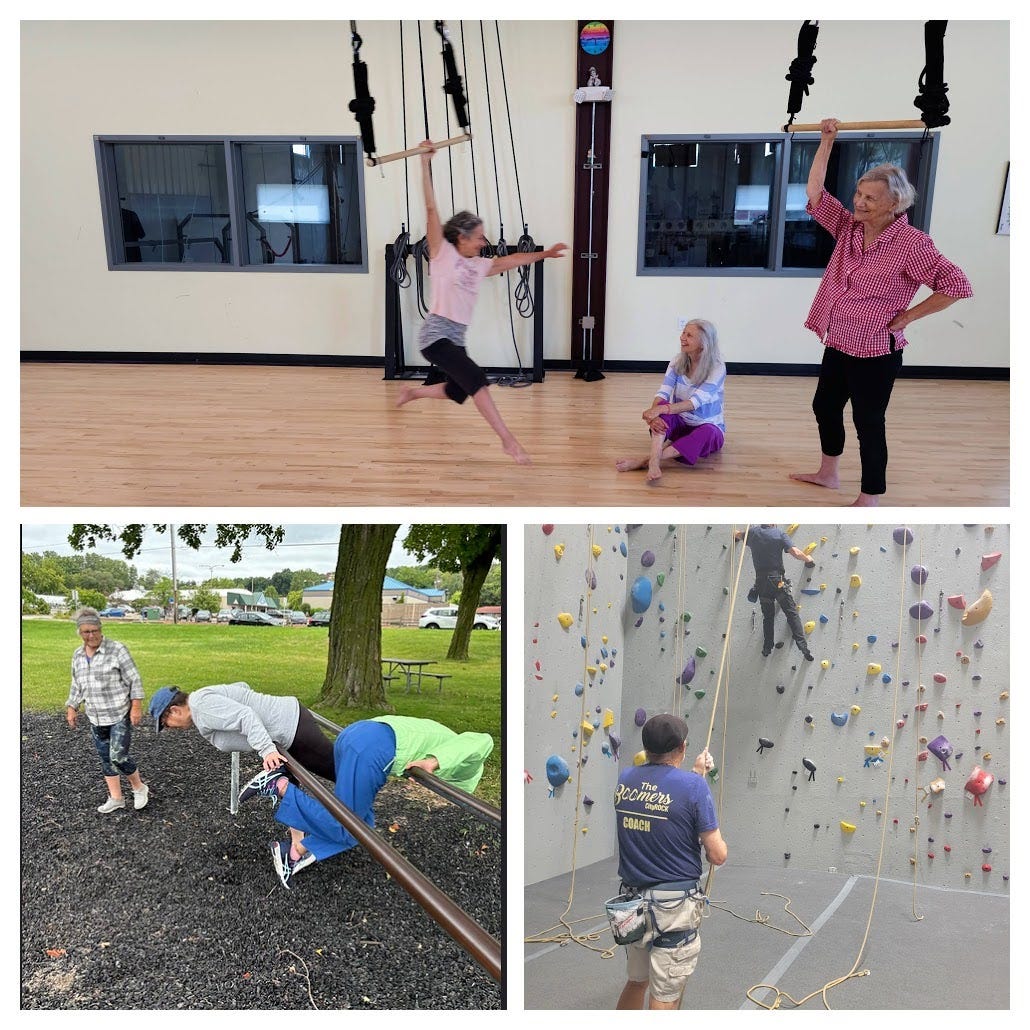
In a survey the AOM task force conducted for the paper “Ability, Not Age: Ending Ageist Assumptions in Physical Activity Programming,” published in the Journal on Active Aging, older adults were asked whether age-based exercise classes (such as “senior yoga”) made assumptions about their abilities.
Seventy-five percent said yes.
Some of their responses included:
“I felt like I had a label—‘old and slow.’”
“They assume a degree of frailty, which is completely wrong in my case.”
“Dumbing down for seniors.”
“They catered to lower-functioning seniors, never considering that some of us are very fit.”
These comments reveal a tension many movement professionals may not realize exists.
When programming for older adults automatically defaults to low-impact or chair-based formats, we may be unintentionally making assumptions about what older adults can do and what they want.
The reality is that many older adults are capable, fit and craving challenge.
In an article I wrote with colleagues for the American Society on Aging, “It’s About Ability, Not Age,” we called for a shift away from age-based classes toward programming based on ability level and desired outcomes. The argument is straightforward: people’s movement needs and capacities vary widely, and age alone is not a useful indicator of either.
Research adds an interesting wrinkle.
Studies show that many people prefer to exercise with others in their same age group.
How do we reconcile these two ideas?
If ability. not age should guide programming, but people still value being with peers in a similar life stage, is there still a place for age-based programs?
I’d argue yes—when they are designed around possibility, not decline.
I’ve interviewed leaders who are examples of what this can look like:
Low-flying trapeze programs for adults 60+ (Hildy Feen)
Boomers rock-climbing clubs (Arlo Neider)
The Over the Hill Pikes Peak Gang, a 50+ outdoor adventure group (Norm Farrar)
Parkour programs for older adults (Shelby Copeland)
These programs are not built on the assumption of limitation. Instead, they offer challenge, growth and adventure, while also creating a community where people can move alongside peers who share similar interests and life experiences.
One survey participant described enjoying both mixed-age classes and an older adult tap dance class. She ultimately preferred the older adult class because she had more in common with the people there. In the mixed-age class, conversations often revolved around raising children and family life, a stage she had already moved beyond.
Movement spaces can serve as powerful “third places” places outside of home and work where people build connection, community and belonging.
This opens the door to a different way of thinking about how we design programs.
What if low-impact and chair-based classes were open to all ages, clearly marketed for anyone who wants or needs that style of movement?
And what if age-based programming was reserved for experiences that emphasize challenge, agency and possibility, rather than reinforcing outdated stereotypes about aging?
Designing programs this way acknowledges two truths at once: that ability varies widely, and that community with peers can matter deeply.
The question then becomes not whether age-based programming should exist, but what story those programs tell about aging.
Are you designing movement programs that center possibility?
Comment below and tell me about the classes or programs you’re leading. I’d love to highlight examples that challenge outdated assumptions about aging and movement.
Upcoming Online Events
Coach Development for Movement Leaders
Wednesday, March 25th 2pm PT/5pm ET
Join Jesse Danger & Cristina Latici with The Movement Creative who will explore some of Movement Creative’s foundational concepts that inform all of our sessions and provide all coaches with the tools to expand and deepen their practice as they approach working with varied populations.
Parkour Without Barriers: Teaching Scalable Movement Skills Beyond Age & Ability
Tuesday, April 21st 2pm PT/5pm ET
Five coaches will share how parkour-based movement skills can be safely and effectively tailored for aging bodies and varying ability levels.
How to Make Movement Meaningful
Wednesday, March 18th 8:30am ET
Explore the different ways we learn movement-and why knowing how to teach matters just as much as what we teach. Hosted by WildStong.
Help Build the AOM Playbook
I’m creating the AOM Playbook — a shared collection of movement games, connection activities, and playful experiences that foster belonging, joy, and community across ages and abilities. I’m drawing inspiration from past podcast guests who are intentionally bringing fun and connection back into movement spaces, and I’m inviting subscribers to do the same. The playbook will be offered as a paid ebook, but anyone who contributes a game or activity that’s included will receive the book for free. This is a resource we can create together.
Submit a game or activity you use in your classes, programs, or communities.
Let’s co-create something that helps people stay physically active and socially connected. Submission deadline is March 27th, 2026.
Expand Your Impact with the AGEnts of Movement Webinar Library
Looking for fresh ideas and deeper insight to support the people you serve? The AGEnts of Movement Webinar Library offers practical, thought-provoking sessions designed for movement leaders working with older adults.
Explore topics like:
Ballroom Basics for Balance
Psychology of chronic disease
How to coach falling safely
Reducing fall risk through game play
How to partner with Physical Therapists
Each webinar provides practical strategies and new perspectives you can immediately bring into your classes, programs, and communities.
Learn. Experiment. Lead movement experiences that matter.
Erin—Great framing of the levels of skill! 🎉
Interestingly, these sort of differences are present at younger ages, and likely deter people from participating when they have so much to gain.